Hazaragi — a language of identity
The people of Malistan speak Hazaragi, a variety of Dari (Persian) with its own distinct vocabulary and intonation developed over centuries in the central Afghan highlands. Language is an essential medium through which family stories, songs, proverbs and knowledge travel between generations. In the diaspora, preserving Hazaragi has become an act of cultural continuity as much as communication.
Kamal et al. · Women and livestock management in Maknak · 5 December 2022A living musical inheritance
Malistan is associated with a rich tradition of Hazaragi folk music. Performers such as Safdar Ali Malistani have carried this sound into wider Afghan musical life. A local account describes Now Deh as a village where music was practised across several families, by women and men, in a way that made musical knowledge communal rather than exceptional. The district's musical heritage spans instrumental performance, poetry and vocal styles particular to the Hazarajat.
Hasht-e Subh · The puzzle of Abay Mirza · 22 July 2019Remembering Abay Mirza
Abay Mirza—also remembered as Mother Mirza—is a celebrated figure in accounts of Malistan's cultural life. A 2016 obituary reports her death in Malistan on 21 July of that year, after several decades associated with folk performance. A later 2019 local account challenges some attributions in the familiar narrative, including questions about which songs are genuinely hers. We link both accounts in our source library, so readers can weigh them side by side.
Ali Shir Shaher · Remembering Abay Mirza · 21 July 2016Wool weaving — Nammad and Glem
Wool working is a traditional craft across several Ghazni districts, including Malistan. Local craftspeople make felt floor coverings known as Nammad and woven rugs called Glem from the wool of highland sheep. These items are domestic objects and a form of artistic expression—their patterns carry aesthetic traditions that vary by village. Wool working is a livelihood as much as a craft, linking livestock care to finished goods.
Kamal et al. · Women and livestock management in Maknak · 5 December 2022Women's knowledge and role in agriculture
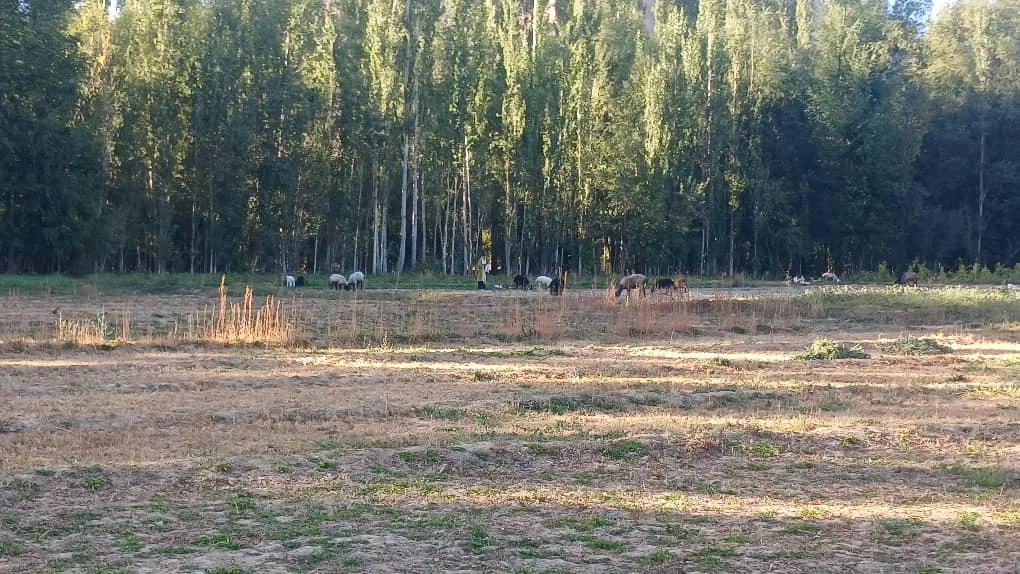
Research in Maknak highlights how central women's labour is to Malistan's agricultural economy. Women manage the daily care of livestock, make decisions about feed and health, and process wool and dairy products. This practical knowledge—accumulated and transmitted between women across generations—is a form of expertise that formal institutions have largely failed to document or support with appropriate training and resources.
Kamal et al. · Women and livestock management in Maknak · 5 December 2022Nowruz and community life
Like Hazara communities across Afghanistan, Malistan marks the Persian New Year Nowruz (نوروز) as a major celebration. The spring festival aligns with the agricultural calendar—it marks the end of winter isolation and the beginning of the planting season. Community gatherings, shared meals and the renewal of social bonds across the district's villages give Nowruz a particular significance in mountain communities where winter can bring months of separation.